
Introduction: A Changing TV Economy
Television in the United Kingdom is undergoing a quiet but significant transformation. For decades, traditional cable and satellite providers shaped how households consumed entertainment. Monthly contracts, bundled services, and fixed channel line ups were the norm. By 2026, however, the economics of television look very different. Internet-based streaming services, including IPTV platforms such as StarPrimeMedia, are reshaping expectations around price, flexibility, and value.
This article explores the growing price gap between StarPrimeMedia and traditional UK cable services. Rather than promoting one option over the other, it provides an informational comparison to help readers understand how costs, service models, and consumer value differ in today’s media landscape.
Understanding StarPrimeMedia
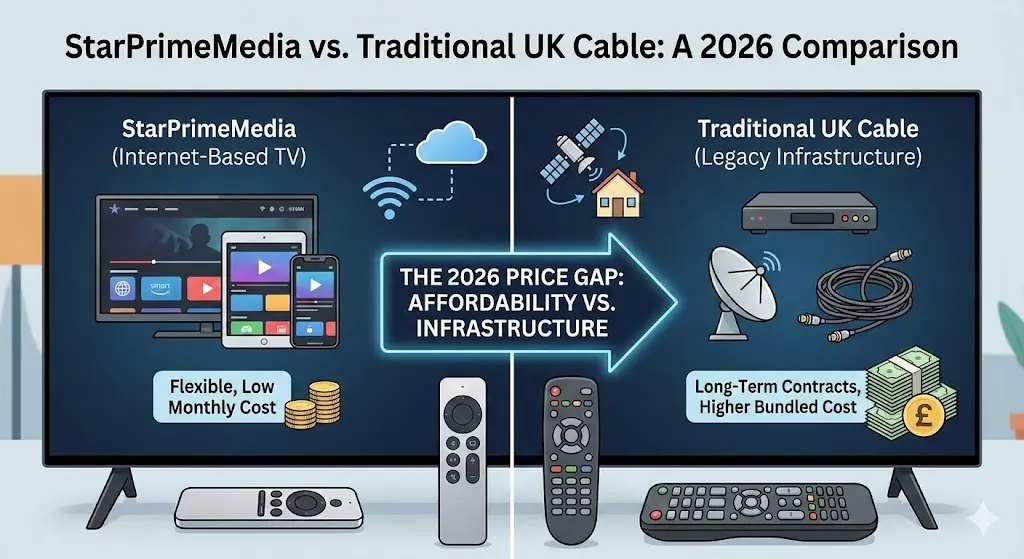
StarPrimeMedia represents a new generation of internet-delivered television services. Instead of relying on cable lines or satellite dishes, it uses standard broadband connections to stream live TV channels and on-demand content directly to users’ devices. This approach removes the need for dedicated infrastructure and physical installation, which is a key reason for its lower pricing model.
Subscribers typically access StarPrimeMedia through smart TVs, mobile apps, streaming devices, or computers. The service model focuses on providing a wide selection of live channels alongside movies, series, and sports content in a single subscription. Plans are often offered on a short-term or annual basis, allowing users to pay only for what they need without committing to long contracts.
What sets services like StarPrimeMedia apart is their emphasis on affordability and flexibility. Instead of structured channel tiers, users are given access to a broad library at a fixed, comparatively low cost.
Traditional UK Cable: How the Model Works
Traditional UK cable television follows a fundamentally different model. These providers depend on extensive infrastructure, supply customer hardware, and commonly combine TV services with internet and phone plans.While this approach delivers stability and regulated broadcasting, it also increases operational costs.
Cable packages are usually structured in tiers, with entry-level plans offering a limited channel selection. Additional content, such as premium sports, movie channels, or multi-room viewing, is typically added at extra cost. Contracts often span 18 to 24 months, and prices may increase once promotional periods expire.
For many households, cable television is part of a broader bundle rather than a standalone service. While this can be convenient, it also makes it harder for consumers to clearly identify how much they are paying specifically for television access.
The 2026 Price Gap Explained
By 2026, the price difference between internet-based TV services and traditional cable has become one of the most talked-about aspects of home entertainment.
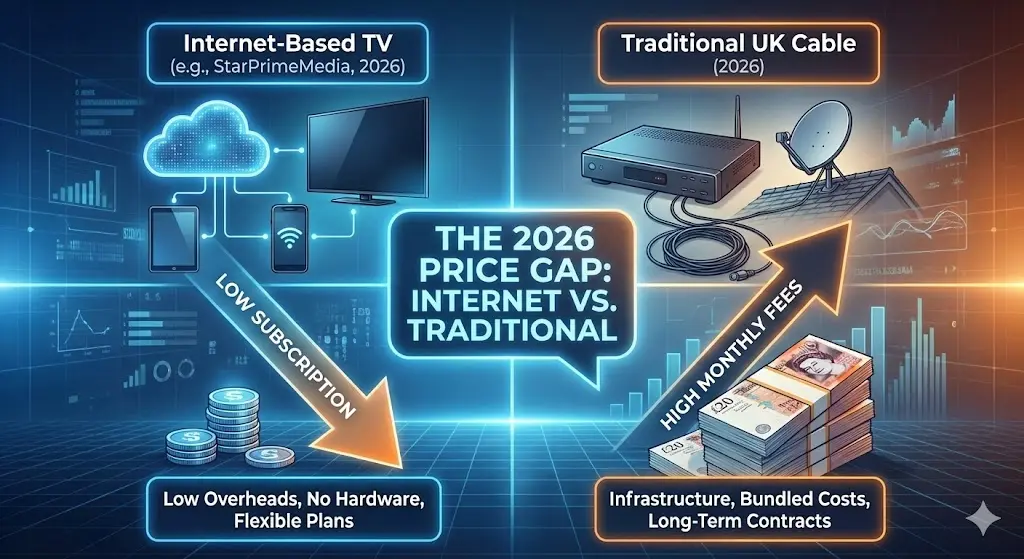
StarPrimeMedia and similar IPTV services generally operate with low overheads. There is no physical installation, no proprietary hardware, and no long-term contracts. As a result, subscription fees remain comparatively low, often costing less for an entire year than a single month of cable television.
Traditional UK cable services, by contrast, reflect the cost of infrastructure maintenance, customer service operations, licensing agreements, and bundled offerings. Monthly fees can quickly rise once additional channels or features are included. Over the course of a year, this creates a substantial financial gap between the two models.
For cost-conscious consumers, this difference is hard to ignore. The savings become even more noticeable in households that no longer rely on live TV as their primary source of entertainment.
Content Access and Viewing Experience
StarPrimeMedia
The viewing experience with StarPrimeMedia is designed around flexibility. Users can watch content on multiple devices, switch locations easily, and access a wide range of international and niche channels. On-demand libraries allow viewers to watch programs at their convenience rather than following broadcast schedules.
However, the experience depends heavily on the internet quality. Streaming performance can vary based on broadband speed and network stability. For viewers comfortable with digital platforms and app-based navigation, this model aligns well with modern viewing habits.
Traditional UK Cable
Cable television offers a more structured and familiar experience. Channels follow fixed schedules, and set-top boxes are designed specifically for TV viewing. This reliability appeals to households that prioritise simplicity and consistent performance.
Cable services also tend to integrate features such as live pause, recording, and catch-up TV in a unified system. While these features are increasingly available through streaming apps, cable platforms often deliver them in a more consolidated way.
Contracts, Flexibility, and Control
One of the clearest distinctions between the two options lies in commitment.
StarPrimeMedia subscriptions are generally flexible. Users can choose short-term access or longer plans without being locked into multi-year contracts. This flexibility allows consumers to adapt their entertainment spending to changing needs.
Traditional cable services typically require long-term agreements. While this can sometimes reduce upfront costs, it limits the ability to switch services or cancel without penalties. For viewers who value control over their monthly expenses, this can be a disadvantage.
Why Consumers Are Rethinking Cable
The shift away from traditional cable is not driven by price alone. Viewing habits have evolved. Many people now prefer on-demand content, personalised recommendations, and the ability to watch on multiple devices. Internet-based services naturally align with these expectations.
At the same time, rising living costs have made households more conscious of recurring subscriptions. When consumers compare the price of cable television to lower-cost alternatives, the value equation changes.
That said, cable still holds appeal for viewers who prioritise officially licensed broadcasts, consistent quality, and comprehensive customer support. For some households, especially those less comfortable with digital platforms, cable remains a familiar and dependable option.
Looking Ahead: What the Price Gap Means
As the UK entertainment market continues to evolve, the price gap between IPTV services like StarPrimeMedia and traditional cable is likely to remain a defining factor. Internet-based services will continue refining their platforms, while cable providers may respond with more flexible pricing or digital-first offerings.
For consumers, this competition ultimately brings more choice. Whether prioritising affordability, flexibility, or stability, viewers now have options that better align with their lifestyles than ever before.
Conclusion
The comparison between StarPrimeMedia and traditional UK cable in 2026 highlights a broader shift in how television is valued and delivered. StarPrimeMedia represents a low-cost, flexible alternative built for internet-driven viewing habits, while traditional cable reflects a legacy model focused on infrastructure, reliability, and bundled services.
Neither option is universally better. The right choice depends on individual preferences, viewing habits, and budget priorities. What is clear, however, is that the growing price gap is reshaping the conversation around television in the UK—and encouraging consumers to rethink how much they really want to pay for entertainment.