
IPTV has completely reshaped how people watch television. From live TV and sports to movies and on-demand series, IPTV allows users to stream content directly over the internet without traditional cable contracts. As IPTV adoption grows worldwide, more viewers are turning to IPTV solutions like iboPlayerMedia, StarPrimeMedia, and Hulu.
But while IPTV offers convenience and flexibility, it also comes with challenges that many users only discover after subscribing. Understanding the downsides of IPTV—and knowing how professional IPTV platforms solve them—can help you avoid frustration and enjoy IPTV the right way.
1. IPTV Performance Depends on Your Internet
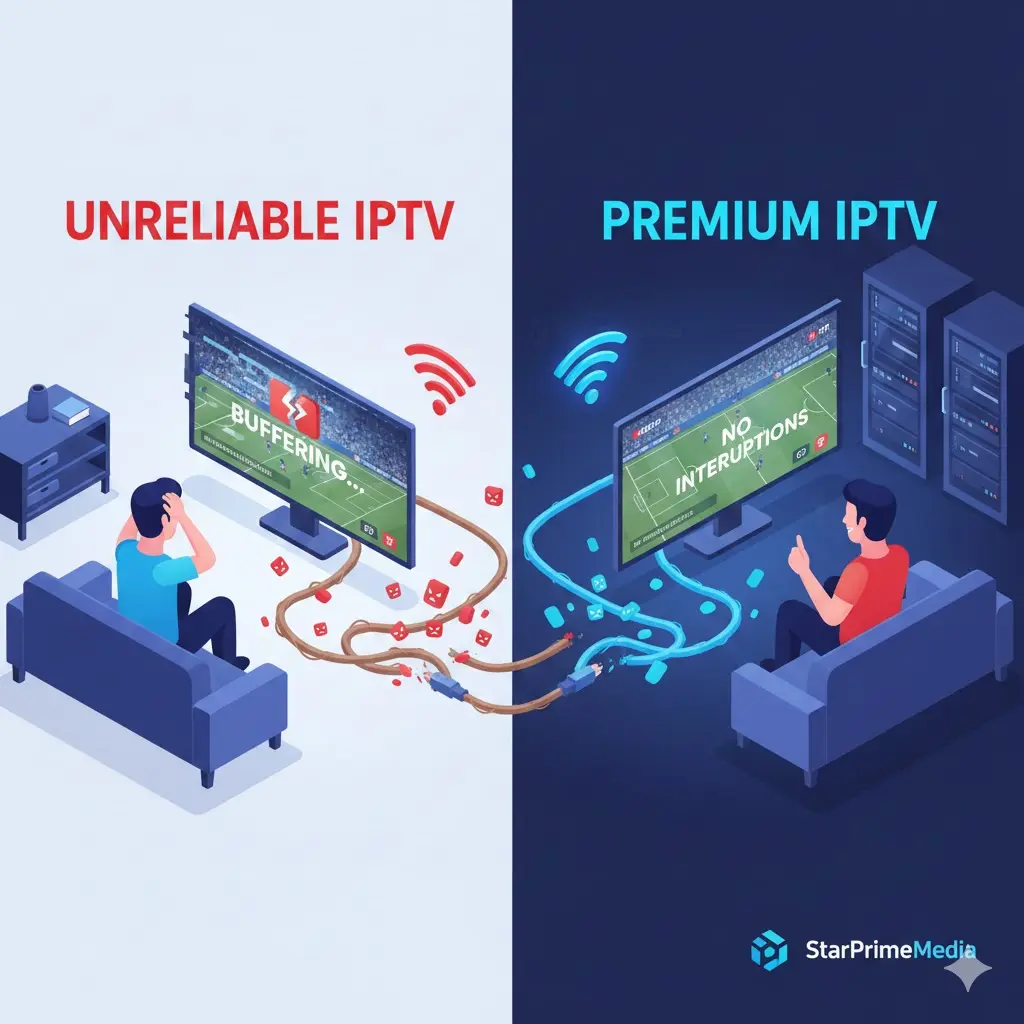
One of the most talked-about downsides of IPTV is its reliance on internet quality. IPTV does not use satellites or cables; instead, IPTV streams content in real time through your internet connection.
When the internet is unstable, IPTV users may face:
-
Buffering during live IPTV channels
-
Delays in IPTV sports streaming
-
Sudden drops in IPTV video quality
This can be especially noticeable during peak hours when many users are online.
How Premium IPTV Solves This
High-quality IPTV platforms are built for performance:
-
iboPlayerMedia IPTV uses smart buffering and adaptive streaming.
-
StarPrimeMedia IPTV runs on high-capacity servers optimized for IPTV traffic.
-
Hulu’s IPTV-based streaming model automatically adjusts resolution to prevent interruptions.
With a stable connection and a trusted IPTV provider, smooth streaming becomes the standard.
2. IPTV Legality Confusion
IPTV is often misunderstood because not all IPTV services operate the same way. Some unverified IPTV providers stream content without proper rights, leading to unreliable services and sudden shutdowns.
This has caused many users to question whether IPTV is safe or legal.
The Right IPTV Approach
Legitimate IPTV platforms focus on transparency and licensing:
-
Hulu operates as a fully licensed IPTV-style streaming service.
-
StarPrimeMedia IPTV emphasizes responsible content delivery.
-
iboPlayerMedia IPTV functions as a legal IPTV media player, allowing users to stream authorized content.
Choosing reputable IPTV platforms eliminates uncertainty and protects users long-term.
3. IPTV Device Compatibility Problems
Not all IPTV services are designed for flexibility. Some IPTV apps only work on limited devices, forcing users to switch hardware or miss out on content.
This lack of compatibility is a common IPTV frustration.
Smart IPTV Platforms Offer Flexibility
Modern IPTV services prioritize accessibility:
-
iboPlayerMedia IPTV works across Smart TVs, Android devices, and Firestick.
-
StarPrimeMedia IPTV supports multiple operating systems with simple IPTV setup.
-
Hulu IPTV streaming runs smoothly on TVs, phones, tablets, consoles, and browsers.
A good IPTV experience should move with you, not restrict you.
4. IPTV Quality Isn’t Always Consistent
Many IPTV services advertise massive channel lists, but more IPTV channels do not always mean better IPTV quality. Users may encounter:
-
Low-resolution IPTV streams
-
Broken IPTV channels
-
Audio and video sync issues
Poor IPTV quality often results from overloaded servers and lack of maintenance.
Quality-Driven IPTV Solutions
Top-tier IPTV platforms focus on reliability:
-
Hulu IPTV content delivers consistently high-quality HD and 4K streams.
-
StarPrimeMedia IPTV prioritizes stable IPTV live channels.
-
iboPlayerMedia IPTV enhances playback with efficient video decoding.
Quality IPTV platforms invest in infrastructure, not just marketing.
5. IPTV Support Can Be a Deal Breaker
One overlooked downside of IPTV is customer support. Many IPTV providers disappear after payment, leaving users stuck with setup issues or technical problems.
Without proper IPTV support, even good services become frustrating.
IPTV With Real Customer Care
Professional IPTV platforms stand out by offering help:
-
StarPrimeMedia IPTV provides user assistance and setup guidance.
-
iboPlayerMedia IPTV offers a clean interface and clear instructions.
-
Hulu IPTV services include professional customer support channels.
Reliable IPTV support builds trust and confidence.
6. IPTV Security and Privacy Risks
Unsecured IPTV apps can expose users to privacy risks such as data tracking or malware. Free or unknown IPTV services are especially vulnerable.
Security is an essential part of a safe IPTV experience.
Secure IPTV Streaming
Trusted IPTV platforms take security seriously:
-
Hulu IPTV streaming follows strict data protection standards.
-
iboPlayerMedia IPTV maintains a clean, secure application structure.
-
StarPrimeMedia IPTV uses protected server connections.
A secure IPTV platform protects both your entertainment and your personal data.
Final Thoughts: IPTV Works Best When Done Right
IPTV is not the problem—poor IPTV providers are. While IPTV has real downsides such as internet dependency, legal confusion, and inconsistent quality, these issues disappear when users choose reliable platforms.
With trusted IPTV solutions like iboPlayerMedia, StarPrimeMedia, and Hulu, IPTV becomes:
-
Stable
-
Secure
-
Legal
-
High-quality
-
User-friendly
If you want a smooth, modern entertainment experience, the key is choosing IPTV platforms that prioritize performance, transparency, and user satisfaction.
IPTV done right isn’t just streaming — it’s smart entertainment.