
As streaming technology continues to evolve, IPTV has become one of the most talked-about ways to watch television content. IPTV, or Internet Protocol Television, delivers TV channels and on-demand content through the internet rather than traditional cable or satellite systems. Legal platforms like Hulu, along with IPTV-compatible media players such as iboplayermedia and content providers like starprimemedia, have helped bring IPTV into the mainstream.
One of the most common questions people ask is: Can IPTV be detected?
The short answer is yes—IPTV activity can be detected, but what that means depends heavily on how IPTV is being used and which services are involved. This article explains IPTV detection in a legal and transparent way, helping readers understand the technology, the risks, and how legitimate IPTV services operate safely and responsibly.
What Does “IPTV Detection” Actually Mean?
Before diving deeper, it’s important to clarify what “detection” means in the context of IPTV. IPTV detection does not automatically mean surveillance or wrongdoing. Detection simply refers to the ability of networks, service providers, or platforms to identify internet traffic associated with IPTV streaming.
This detection may occur through:
-
Internet Service Providers (ISPs)
-
Streaming platforms
-
Network management systems
-
Content delivery networks
Legal IPTV services expect and allow this visibility as part of normal internet operations.
How IPTV Traffic Is Identified
IPTV uses internet data packets to transmit video streams. These packets have identifiable characteristics, such as:
-
Streaming protocols
-
Data volume patterns
-
Continuous real-time connections
ISPs can often see that streaming is happening, but not necessarily what content is being watched when the IPTV service is legal and encrypted. Services like Hulu use secure, encrypted streaming protocols, meaning while activity is visible, content details remain private.
Media players such as iboplayermedia function as playback tools and do not hide or manipulate traffic. They simply allow users to access IPTV content provided by legitimate sources.
Legal IPTV vs. Unauthorized IPTV Detection
This is where the conversation often becomes confused. IPTV itself is a legal technology, but there is a clear distinction between licensed IPTV services and unlicensed IPTV services.
Legal IPTV Services
Examples include:
-
Hulu
-
IPTV platforms distributing licensed content
-
IPTV players like iboplayermedia used with legal content
-
Providers such as starprimemedia that emphasize compliance and quality
These services operate openly and transparently. Their IPTV traffic is detectable in the same way as Netflix, YouTube, or any other streaming service. There is no legal risk to the user when accessing authorized IPTV content.
Unauthorized IPTV Services
Detection becomes an issue mainly when IPTV is used to access unlicensed or pirated content. These services often:
-
Avoid transparency
-
Lack encryption or proper security
-
Operate outside copyright regulations
Such IPTV services may attract attention due to unusual traffic patterns or complaints from rights holders. This is not a flaw of IPTV technology itself, but rather the result of improper use.
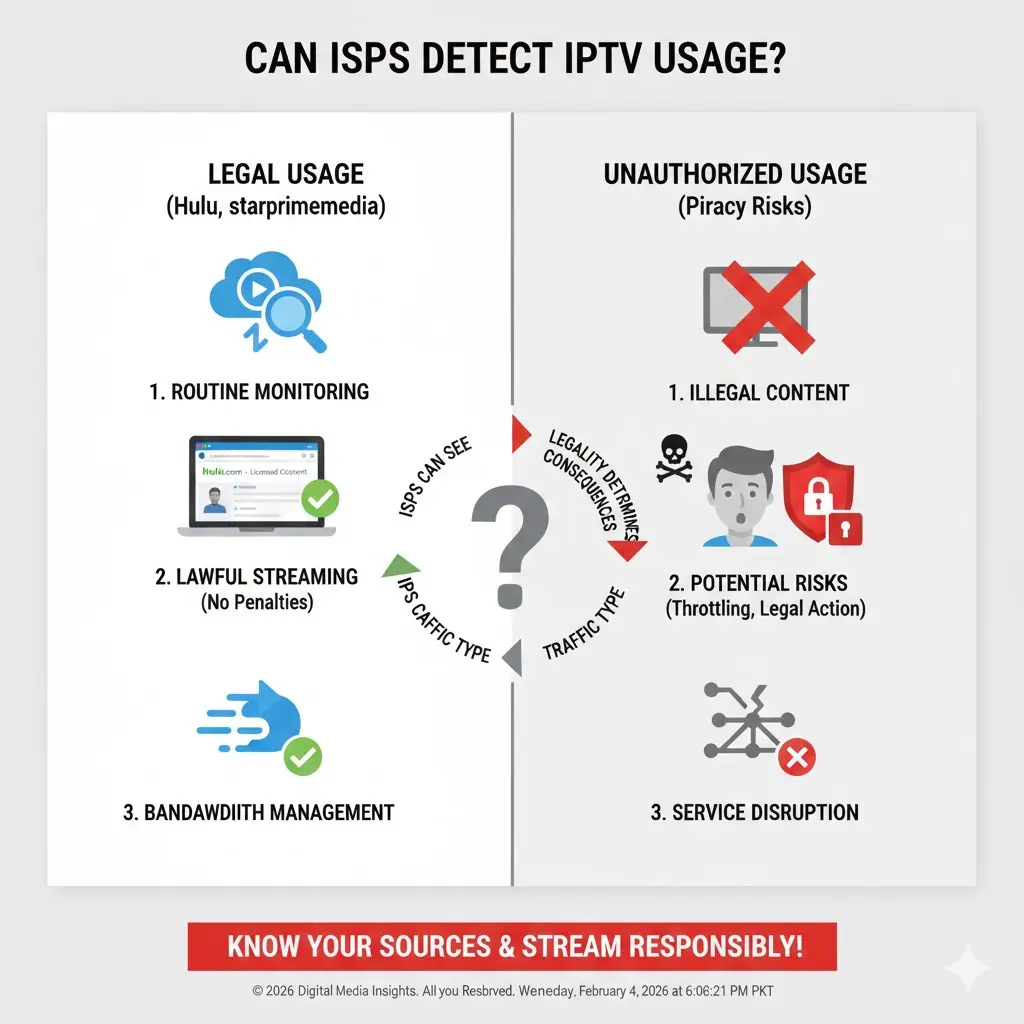
Can ISPs Detect IPTV Usage?
Yes, ISPs can detect that IPTV streaming is occurring, but this is true for all streaming services. From a technical standpoint, IPTV traffic is similar to other high-bandwidth activities like video calls or online gaming.
ISPs may monitor traffic to:
-
Manage bandwidth
-
Ensure service quality
-
Prevent network congestion
For users of legal IPTV services like Hulu, or IPTV platforms supported by starprimemedia, this detection is routine and harmless. ISPs do not penalize customers for lawful IPTV usage.
Can IPTV Be Blocked or Restricted?
In some regions, ISPs may throttle or restrict certain types of traffic during peak usage hours. This can affect IPTV performance, resulting in buffering or reduced quality.
However, reputable IPTV services work with modern content delivery networks to minimize these issues. IPTV players like iboplayermedia are optimized to handle adaptive streaming, helping maintain smooth playback even when network conditions change.
Legal IPTV platforms also comply with regional regulations, reducing the likelihood of service interruptions.
Privacy and IPTV Detection
Privacy is a valid concern for any internet user. With IPTV, privacy risks largely depend on the credibility of the service provider.
Trusted IPTV platforms:
-
Use encrypted connections
-
Follow data protection regulations
-
Maintain transparent privacy policies
Hulu, for example, adheres to strict privacy and data security standards. IPTV tools like iboplayermedia do not collect content data themselves; they simply facilitate playback from the user’s chosen source.
Using reputable IPTV services significantly reduces privacy concerns related to detection.
Why IPTV Detection Isn’t a Problem for Legal Users
For viewers using IPTV legally, detection is not something to fear. Detection does not equal monitoring for punishment. It simply reflects normal internet traffic management.
When IPTV is used responsibly:
-
There are no legal consequences
-
Streaming remains private and encrypted
-
Service quality is maintained
-
User experience improves
Providers like starprimemedia focus on delivering stable, high-quality IPTV content while operating within legal frameworks, making detection a non-issue for their users.
Choosing the Right IPTV Platform Matters
Many concerns about IPTV detection arise from misinformation or experiences with unreliable providers. Choosing the right IPTV ecosystem makes a major difference.
-
iboplayermedia offers a clean, user-friendly IPTV player designed for compatibility and performance
-
starprimemedia emphasizes structured, reliable IPTV content delivery
-
Hulu represents a fully licensed IPTV streaming service with strong infrastructure and support
These platforms show how IPTV can be used confidently, legally, and efficiently.
Final Thoughts: IPTV Detection Explained Simply
So, can IPTV be detected? Yes—but detection alone is not a problem. IPTV detection is a normal part of how internet streaming works. Issues only arise when IPTV is used improperly or through unauthorized sources.
When viewers choose legal IPTV services, detection does not lead to penalties, risks, or privacy violations. Instead, it supports better performance, security, and reliability.
With trusted platforms like iboplayermedia, compliant providers like starprimemedia, and established services such as Hulu, IPTV remains a safe, modern, and powerful way to enjoy digital entertainment.
Understanding IPTV detection helps users make informed decisions—and reinforces why legal IPTV is the smartest choice.